
 Written by
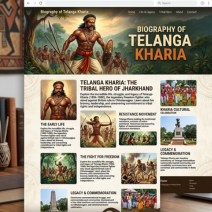
 Telanga Kharia was one of the earliest and most courageous tribal freedom fighters of India. Belonging to the Kharia tribe of the Chotanagpur region (present-day Jharkhand), he led a powerful resistance movement against British colonial rule long before the mainstream Indian freedom struggle gained momentum. He is remembered as a symbol of indigenous self-rule, tribal unity, and armed resistance.
Biography of Telanga Kharia [तेलंगा खड़िया की जीवनी]
1. परिचय
Biography of Telanga Kharia :Telanga Kharia was one of the earliest and most courageous tribal freedom fighters of India. Belonging to the Kharia tribe of the Chotanagpur region (present-day Jharkhand), he led a powerful resistance movement against British colonial rule long before the mainstream Indian freedom struggle gained momentum. He is remembered as a symbol of indigenous self-rule, tribal unity, and armed resistance.
Telanga Kharia भारत के प्रारंभिक आदिवासी स्वतंत्रता सेनानियों में से एक थे। उन्होंने अंग्रेजों के विरुद्ध संगठित विद्रोह का नेतृत्व किया और आदिवासी स्वशासन, एकता और अधिकारों के लिए संघर्ष किया।
2. प्रारंभिक जीवन
तेलंगा खड़िया का जन्म 9 फरवरी 1806 को झारखंड के गुमला जिले के मुरगु गाँव में हुआ था।
-
- पिता: थुनिया खड़िया
-
- माता: पेटी खड़िया
-
- पत्नी: रतनी खड़िया
बचपन से ही वे साहसी, बुद्धिमान और नेतृत्व क्षमता वाले थे। वे कृषि और पशुपालन से जुड़े थे तथा अपने पिता के माध्यम से राजदरबार की गतिविधियों को समझते थे।
3. सामाजिक और राजनीतिक स्थिति
अंग्रेजों के शासन में आदिवासी समाज को कई समस्याओं का सामना करना पड़ा:
-
- परंपरागत परहा शासन व्यवस्था का विनाश
-
- जमीन पर भारी कर (मालगुजारी)
-
- जमींदारों और साहूकारों द्वारा शोषण
-
- आदिवासियों की जमीन छीनना
इन परिस्थितियों ने तेलंगा खड़िया को विद्रोह के लिए प्रेरित किया।
4. विद्रोह की शुरुआत
लगभग 1849-1850 के आसपास उन्होंने आंदोलन शुरू किया।
प्रमुख कार्य:
-
- जूरी पंचायत की स्थापना
-
- आदिवासी समाज को संगठित करना
-
- अधिकारों के प्रति जागरूकता फैलाना
5. सैन्य संगठन और संघर्ष
उन्होंने एक मजबूत सेना तैयार की:
-
- 900–1500 प्रशिक्षित योद्धा
-
- अखाड़ों में युद्ध प्रशिक्षण
-
- पारंपरिक हथियारों का उपयोग
रणनीति:
-
- गुरिल्ला युद्ध पद्धति
-
- अंग्रेजों और जमींदारों पर अचानक हमला
6. गिरफ्तारी और कारावास
-
- विश्वासघात के कारण गिरफ्तार
-
- लोहरदगा और बाद में कोलकाता जेल में कैद
-
- लगभग 18 वर्षों तक कारावास
7. पुनः संघर्ष
रिहाई के बाद उन्होंने फिर से आंदोलन शुरू किया और लोगों को संगठित किया।
उन्हें “बूढ़ा शेर” कहा जाने लगा।
8. शहादत
23 अप्रैल 1880 को एक अंग्रेज समर्थक द्वारा उनकी हत्या कर दी गई।
उनका अंतिम संस्कार गुप्त रूप से किया गया।
9. योगदान और विरासत
-
- आदिवासी आंदोलन के अग्रदूत
-
- स्वशासन के रक्षक
-
- आने वाले आंदोलनों (जैसे Birsa Munda) के प्रेरणा स्रोत
10. स्मरण
-
- 9 फरवरी को जयंती मनाई जाती है
-
- “शहीद तेलंगा मेला” आयोजित होता है
-
- उन्हें भारत के अज्ञात नायकों में गिना जाता है
निष्कर्ष
तेलंगा खड़िया का जीवन साहस, बलिदान और न्याय के लिए संघर्ष का प्रतीक है। उन्होंने आदिवासी समाज को संगठित कर अंग्रेजों के विरुद्ध एक मजबूत आंदोलन खड़ा किया।
Biography of Telanga Kharia explores the life of the tribal freedom fighter and leader. Read now to learn about his courage, legacy, and contribution to India!
Biography of Telanga Kharia,Biography of Telanga KhariaBiography of Telanga KhariaBiography of Telanga KhariaBiography of Telanga KhariaBiography of Telanga KhariaBiography of Telanga KhariaBiography of Telanga KhariaBiography of Telanga KhariaBiography of Telanga Kharia
Biography of Telanga Kharia (1806–1880)
1. Introduction
Telanga Kharia was one of the earliest and most courageous tribal freedom fighters of India. Belonging to the Kharia tribe of the Chotanagpur region (present-day Jharkhand), he led a powerful resistance movement against British colonial rule long before the mainstream Indian freedom struggle gained momentum. He is remembered as a symbol of indigenous self-rule, tribal unity, and armed resistance.
2. Early Life and Background
Telanga Kharia was born on 9 February 1806 in Murgu village, located in present-day Gumla district of Jharkhand.
- Father: Thunya Kharia (worked as a storekeeper in the court of the Nagvanshi king of Ratu)
- Mother: Peti Kharia
- Wife: Ratni Kharia
From a young age, he displayed qualities of bravery, leadership, and strong oratory skills. He was engaged in agriculture and animal husbandry and became aware of political and social issues by observing discussions in the royal court where his father worked.
3. Socio-Political Context
During the mid-19th century, the British East India Company extended its control over the Chotanagpur region. This resulted in:
- Destruction of the traditional Parha self-governance system
- Imposition of land taxes (malgujari) on tribal lands
- Exploitation by zamindars and moneylenders (sahukars)
- Large-scale land alienation of tribal communities
These injustices deeply affected tribal life and triggered resistance movements across the region.
4. Beginning of the Revolt
Around 1849–1850, Telanga Kharia began organizing tribal communities against British oppression.
Key Initiatives:
- Established “Jury Panchayats” (parallel self-governance systems)
- Revived tribal unity and communication networks
- Raised awareness about rights and resistance
These institutions functioned as an alternative administrative structure opposing British authority.
5. Military Organization and Guerrilla Warfare
Telanga Kharia was not only a social reformer but also a military leader.
- Built an army of 900–1500 trained tribal warriors
- Established “Akhara” training centers for combat practice
- Used traditional weapons:
- Bow and arrow
- Spear, axe, sword
Strategy:
- Adopted guerrilla warfare tactics
- Conducted surprise attacks on:
- British officials
- Zamindars and collaborators
- Colonial establishments (including treasuries)
Between 1850 and 1860, his rebellion reached its peak and posed a serious challenge to British authority in the Chotanagpur region.
6. Arrest and Imprisonment
Due to his growing influence, the British targeted him.
- Betrayed by an informer linked to zamindars
- Arrested during a village meeting
- Imprisoned first in Lohardaga and later in Calcutta jail
- Served 18 years of imprisonment
7. Revival of Movement
After his release, Telanga Kharia did not abandon his mission.
- Returned to Sisai Akhara
- Reorganized his followers
- Planned to strengthen the resistance movement again
His resilience at an advanced age earned him the title “Budha Sher” (Old Lion).
8. Martyrdom
On 23 April 1880, Telanga Kharia was assassinated.
- Shot by a British agent named Bodhan Singh during prayer at an Akhara
- His followers secretly carried and buried his body to prevent British desecration
His burial site at Soso Neem Toli (Telanga Topa Tand) remains a place of reverence.
9. Legacy and Contribution
Telanga Kharia’s contribution is significant in multiple ways:
1. Pioneer of Tribal Resistance
He was among the earliest tribal leaders to organize a structured rebellion against British rule.
2. Defender of Indigenous Governance
He tried to preserve the traditional Parha system and tribal autonomy.
3. Inspiration for Future Movements
His resistance laid the groundwork for later revolts, including those led by
Birsa Munda.
4. Symbol of Unity and Self-Rule
He united scattered tribal groups into a powerful resistance force.
10. Commemoration
- His birth anniversary (9 February) is celebrated annually
- A “Shahid Telanga Mela” is organized in his memory
- Remembered as an “Unsung Hero” of India’s freedom struggle
11. Conclusion
Telanga Kharia stands as a towering figure in India’s tribal and freedom history. At a time when colonial rule was tightening its grip, he mobilized marginalized communities, challenged exploitation, and fought for dignity and self-governance. His life reflects courage, sacrifice, and an unwavering commitment to justice.